Rookie Coach

Author name: nuelladavid

Uncategorized

5 Fun 1 v 1 Youth Soccer Activities

One of the best ways to naturally bring out the competitive nature in your soccer players during practice is by adding in 1 v 1 activities, small sided games, and races. The human spirit is instantly ignited when there is a goal to score, a race to win or an opponent to beat. Below we give you 5 simple, yet competitive 1 v 1 soccer activities to ramp up your practices and help players work on their 1 v 1 skills. Before we dive into the activities, take a look below at 5 basic dribbling skills to use when beating a defender.

Uncategorized

Keep Street Soccer Alive

When you read interviews, stories, and biographies of all great soccer players – especially the ones from the past – there is always one common denominator; as a child they spent countless hours playing soccer in the street. The street is where they picked up and improved the technical, creative, mental and physical skills that formed the foundation of their successful careers. And even if they had spent many hours at a professional youth academy, those former players still believe that the street gave them many valuable skills that the academy would not have been able to provide them. The most important value of street soccer was that kids were solely responsible for everything that happened. The kids decided what game was going to be played. They set the rules, picked the teams, and were the referees and coaches. They corrected a teammate who was a ball hog or a cherry picker (often in a not-so-subtle way!). They broke up brawls and stood up for themselves. They got yelled at when they made a mistake.  They also understood what their place was in the street soccer pecking order. Were you picked first, somewhere in the middle, or at the end? In order to move up in that pecking order, you had to play harder, tougher and better. It was that simple. You were celebrated for scoring a winning goal or for making a great save. Admired for pulling off great moves or for being able to play a precise long ball. Because of the shoes you wore, the different surfaces you played on, and the variety of balls that were used, greater demands were made on technical skills as well. You did not want to fall on the pavement, or trip over a curb. You had to avoid running into a lamppost or a wall. And the street soccer player unknowingly improved motor skills, agility, and awareness as a result. The street was a fantastic learning environment – a place that was a ton of fun and free of charge. Unfortunately, street soccer will never come back. Now the only place where young soccer players can experience street soccer and its benefits is at their soccer club. Clubs and coaches should therefore try to add street soccer elements to practice sessions and to their soccer facilities. Here are several ideas on how to add street soccer elements to your training sessions and to your club:

Uncategorized

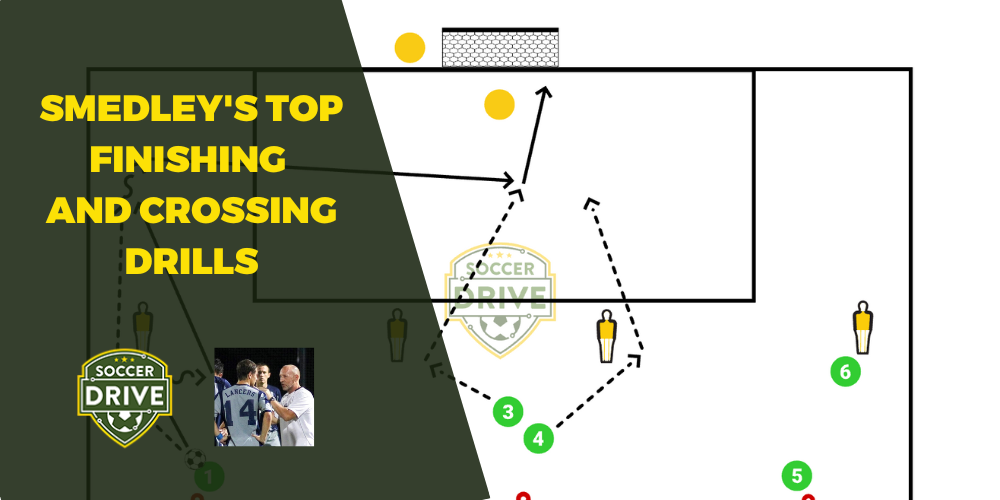
Top Finishing and Crossing Drills for Youth Soccer

Developing finishing and crossing skills is an important aspect of soccer that can greatly contribute to your players’ overall growth and enjoyment of the game. By working on these skills, your team can become more well-rounded and confident on the field. In this blog post, we’ve gathered some of our favorite drills designed to help your players improve their finishing and crossing techniques in a fun and engaging learning environment. The Double Goal Game provides a dynamic environment for practicing various types of crosses and finishes. Players have the freedom to cross at either goal from any side, offering numerous opportunities for unexpected finishing attempts and working on a wide range of crossing techniques. This drill focuses on the precision and timing of finishing runs. Players will work on completing headers at sprint speed, while learning when to finish the cross and when to head it back across. This exercise helps develop timing and spatial awareness.

Uncategorized

It’s All About The Details

When analyzing goals in soccer, it is clear that small details usually made the difference. A defender was not tight enough on an opponent. A tackle was made a fraction too early or a fraction too late. The wall was just a couple of inches too far to the left or too far to the right, or a short player was mistakenly marking a much taller player when defending a corner kick. Running a practice session is all about details too. A practice plan should include the soccer objectives for the session and must be age and ability appropriate. The coaching points should be spot on and there should be many repetitions for the players.   But once it is practice time and the ball starts rolling, there are many more details that need to be taken care of to make the practice session a success. Below find a list of details that the coach might keep in mind when running a training session. It’s all about about the details.

Scroll to Top